
Keeping a 6-Year-Old Vaillant ecoTEC Plus Running Like New in Ealing
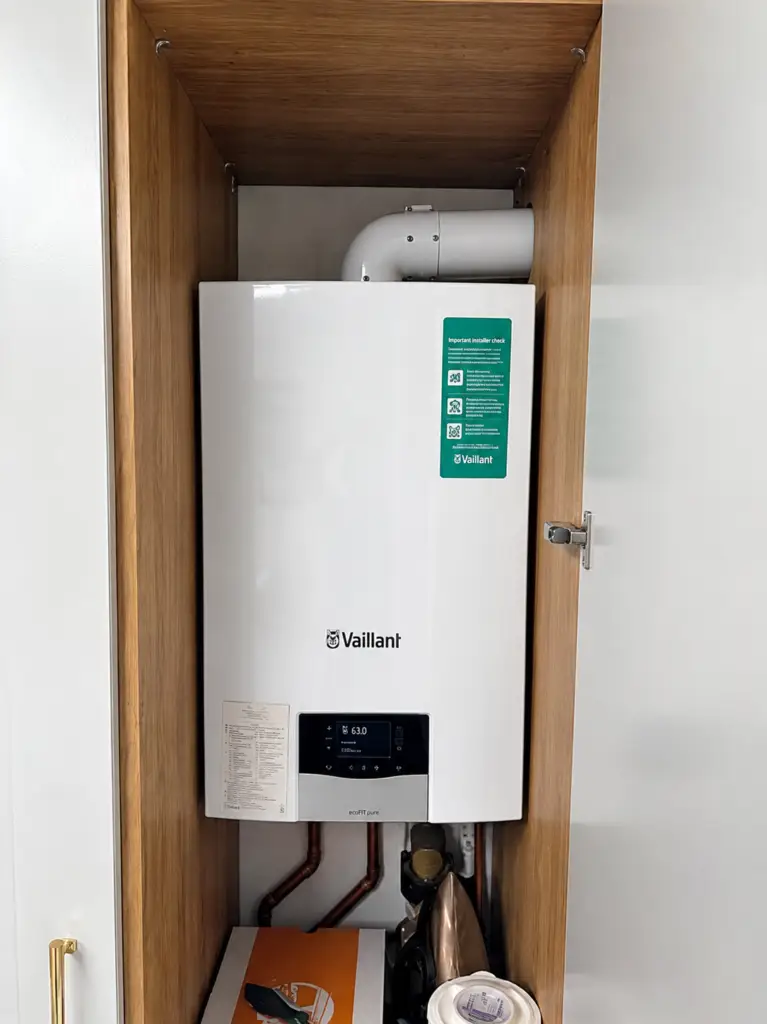
The magnetic filter told the real story on this job. To the homeowner, their central heating was working fine, hot water, warm radiators, no fault codes. But when I opened up the filter housing on this 6-year-old Vaillant ecoTEC plus in Ealing, I found it packed solid with thick black iron oxide sludge. Left another year, that debris would have been bypassing the filter entirely and grinding its way through the circulation pump and heat exchanger.
Job Snapshot
Detail | Information |
Customer type | Homeowner |
Location | Ealing, West London (W5) |
Boiler model | Vaillant ecoTEC plus |
Service type | Annual boiler service |
Boiler age | 6 years old |
Issue found | Magnetic filter fully blocked with iron oxide sludge; inhibitor levels slightly low |
Serviced by | Vincent O’Gara — Ealing Boiler Services |
The Problem
When you rely on your boiler every day, it is incredibly easy to forget it needs professional attention. This homeowner in Ealing called us to book their annual service on a 6-year-old Vaillant ecoTEC plus. To them, everything seemed perfectly fine — the heating was working, hot water was running at a good temperature, and there were no fault codes or kettling noises.
As a Gas Safe registered engineer who has worked on heating systems across West London for years, I know that ‘seems fine’ and ‘running efficiently and safely’ are two very different things. The real purpose of an annual service is preventative maintenance — getting under the casing and catching the hidden issues before they become expensive winter breakdowns.
The true health of any central heating system is often hidden inside the pipework and filters — completely out of sight from the homeowner. This is why a thorough service goes well beyond the boiler itself.
Our Solution
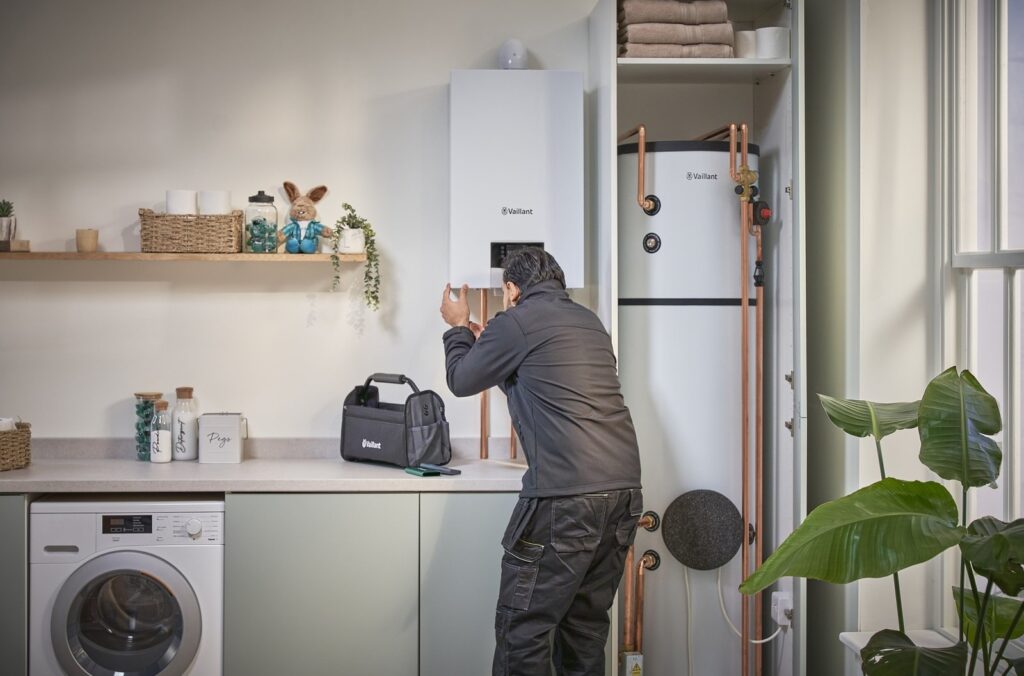
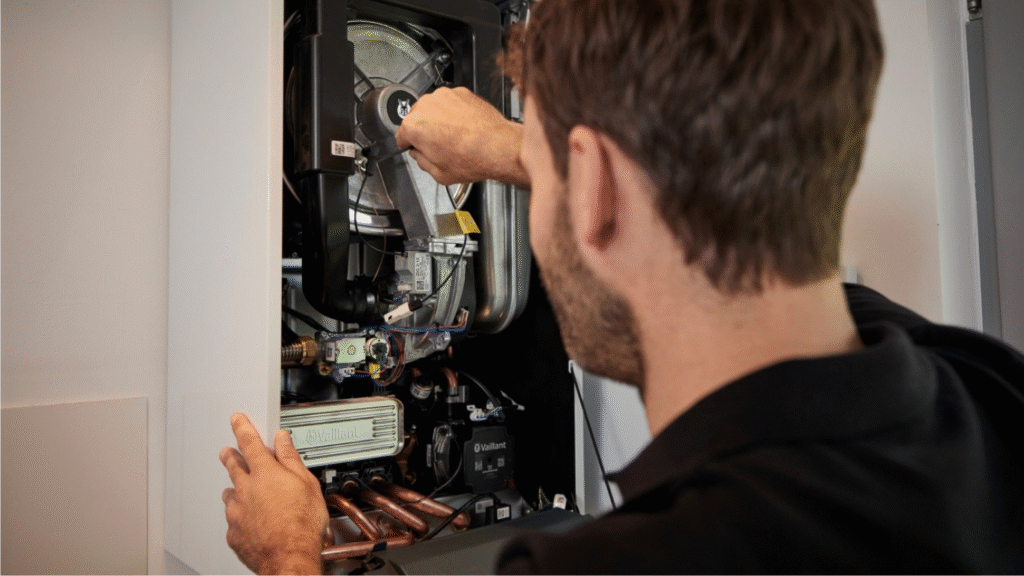
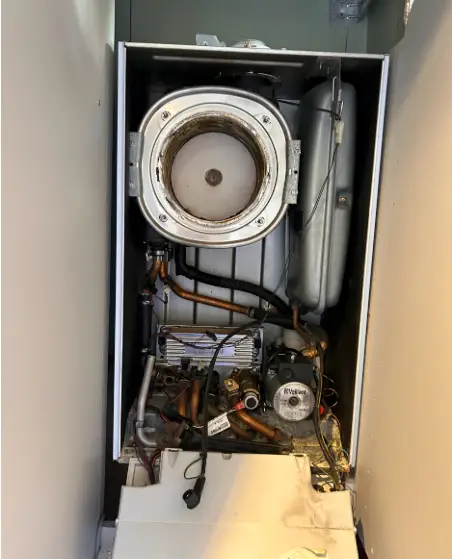
I began the comprehensive service procedure following Vaillant’s manufacturer guidelines. First, I safely isolated the boiler from the electrical supply and gas mains, then removed the front casing to inspect the internal components. I checked the main burner, primary heat exchanger, spark electrodes, and the seals that keep combustion gases safely contained. For a 6-year-old unit, everything inside the main boiler was showing normal wear — exactly what you want to see. I cleaned the spark electrode and flame rectification probe to ensure reliable ignition.
Next, I turned my attention to the magnetic filter. When I isolated and opened it up, I found it packed solid with thick black sludge. It had done its job perfectly — but it was at full capacity. If I had not cleaned it out during this service, the magnetite would have eventually bypassed the blocked filter and started clogging the narrow waterways inside the primary heat exchanger, or grinding down the circulation pump bearings. That is one of the most common causes of premature boiler failure I see across Ealing and the wider West London area.
I took the filter housing outside to clean it properly without making a mess in the customer’s home. I washed the central magnet until it was completely clear, lubricated the O-ring seals, and reassembled before re-pressurising the system to the correct 1.5 bar.
Cleaning the filter alone is only half the job. I took a water sample from a radiator bleed valve and tested the chemical inhibitor levels. The inhibitor was slightly low but still just within an acceptable range. I made a clear note on the official service record to top up the inhibitor at next year’s service before the protection drops below the required threshold.
Finally, I fired the boiler up on maximum output, checked the gas rate at the meter, and used my calibrated flue gas analyser to confirm the boiler was burning cleanly and safely within Vaillant’s specified tolerances. The readings were spot on.
The Result
No replacement parts were needed on this visit. It was a textbook example of why routine professional maintenance matters so much. By thoroughly clearing that blocked magnetic filter, I removed a significant amount of strain from the boiler’s circulation pump and heat exchanger — directly extending the lifespan of the unit and keeping household energy bills down by ensuring the system does not have to work harder than necessary.
The homeowner now has a boiler certified as safe by a Gas Safe engineer, running at peak efficiency, with their Vaillant manufacturer warranty fully documented and valid for another year. They also have a clear note on their service record to watch the inhibitor levels — something most homeowners would never know to ask about.
Frequently Asked Questions
If it’s not covered below, give us a call — straight answers, no jargon.
Q1. How often should I service my Vaillant boiler?
Vaillant recommend an annual service to keep your manufacturer warranty valid. But beyond the warranty, a yearly check is the only reliable way to catch hidden problems — like a blocked magnetic filter or dropping inhibitor levels — before they become expensive breakdowns. For most homes in Ealing and West London, once a year in autumn before the heating season is the ideal time to book.
Q2. What is a magnetic filter and why does it matter?
A magnetic filter sits on the return pipe and uses a powerful magnet to trap black iron oxide sludge — also called magnetite — that forms naturally as water reacts with the steel inside your radiators. Left uncleaned, this sludge eventually bypasses a full filter and works its way into the boiler, clogging the heat exchanger and grinding down the circulation pump bearings. It is one of the most common causes of premature boiler failure we see across West London, and it is entirely preventable with a proper annual service.
Q3. My boiler seems fine — do I still need a service?
Yes. ‘Seems fine’ and ‘running safely and efficiently’ are two very different things. The problems that lead to costly breakdowns — sludge build-up, low inhibitor levels, degraded seals — are all invisible to a homeowner and undetectable without opening the boiler up. The whole point of a service is catching these issues early, not waiting for a fault code or a cold morning to force your hand.
Q4. What does an annual boiler service actually include?
On a Vaillant, we follow the manufacturer service procedure throughout: visual safety checks, casing removal and internal inspection, burner and heat exchanger check, cleaning the spark electrode and flame rectification probe, magnetic filter clean, water chemistry and inhibitor test, gas rate check at the meter, and flue gas analysis with a calibrated analyser. You receive a completed service record on the day, keeping your warranty documentation current.
Q5. Will servicing affect my Vaillant warranty?
Servicing by a Gas Safe registered engineer keeps your Vaillant warranty valid — which is exactly what we are. Skipping annual services, or having the work done by someone not Gas Safe registered, can void the warranty entirely. We complete and sign the manufacturer service record on every visit, so you have full documentation if you ever need to make a warranty claim.
Q6. Do you cover my area in West London?
We cover Ealing, Hanwell, Pitshanger, Acton, Greenford, Southall, Perivale, and the surrounding West London postcodes — W3, W5, W7, W13, UB1, and UB2. Not sure if you’re in range? Give us a call and we’ll confirm straight away.
Need a Boiler Service in Ealing or West London?
Don’t wait for your boiler to break down on the coldest day of the year before giving it some attention. Regular, professional servicing saves you money on energy bills and prevents the hassle of unexpected, expensive repair bills.
We cover Ealing, Hanwell, Pitshanger, Acton, Greenford, Southall, and the wider West London area. All work is carried out by Gas Safe registered engineers, with full documentation provided on completion.
Call Ealing Boiler Services: 0208 538 1891 | ealingboilerservices.co.uk