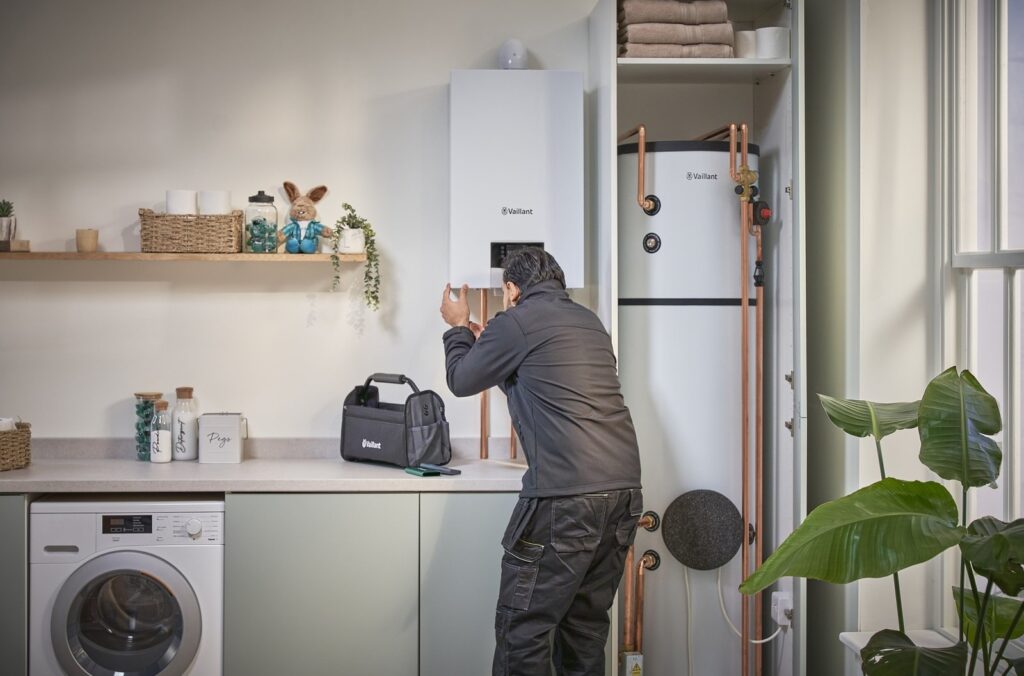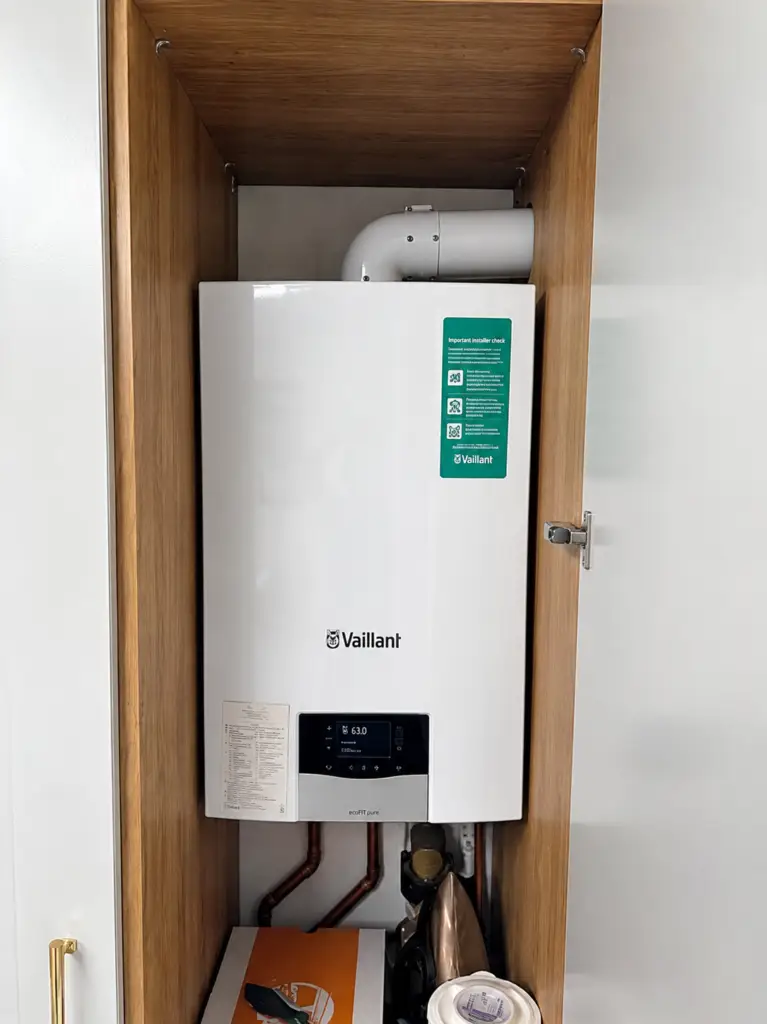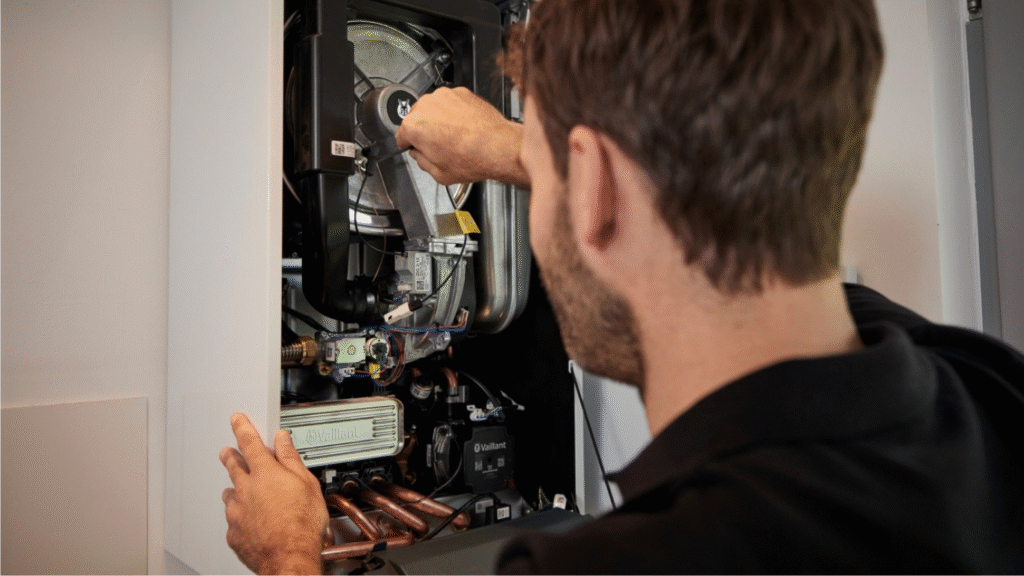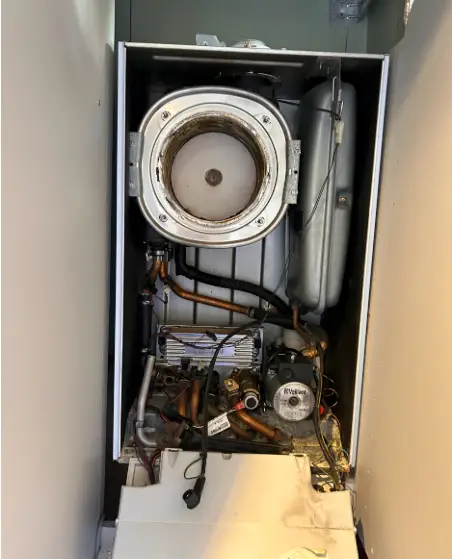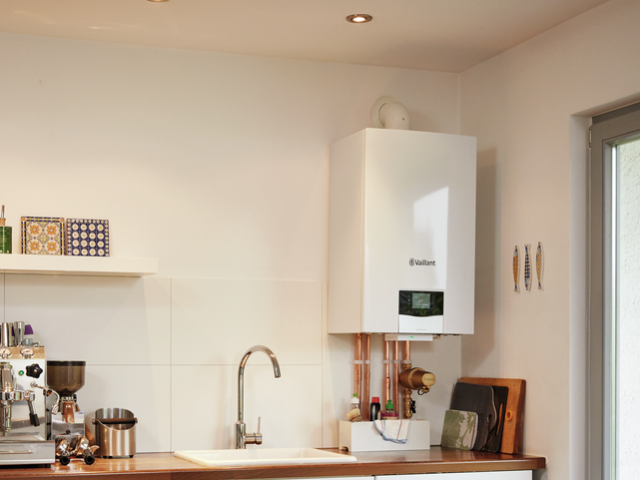

A customer in Ealing booked a standard boiler service for their Vaillant 637 boiler. During the initial conversation, they mentioned what seemed like a small issue: they were having to top up the boiler pressure regularly using the filling loop.
That might sound minor, but constantly topping up a sealed heating system is never something to ignore. A healthy system should hold its pressure for long periods. If the pressure keeps dropping, water is escaping somewhere.
What started as a routine annual service quickly became a more detailed diagnostic and repair job. Once the boiler was opened and tested, several connected faults were found.
The Problem
The customer had noticed that the boiler pressure kept dropping and needed topping up every few days.
This is usually a sign of a leak or internal fault. It could be a leaking radiator valve, a hidden pipework leak, a passing pressure relief valve, or a failed expansion vessel.
On this Vaillant 637, the issue was not caused by one single fault. Several parts had failed or been affected, creating a knock-on effect across the boiler and heating system.
What We Found
After carrying out the initial checks, we found:
- A failed expansion vessel
- A leaking automatic air vent
- A faulty pressure relief valve
- A blocked pressure sensor
- Sludge build-up caused by repeated refilling
Each fault was connected to the next. The failed expansion vessel caused the system pressure to spike when the heating came on. This forced the pressure relief valve to open, releasing water outside. The customer then kept topping the boiler back up, which introduced fresh water into the system and contributed to sludge forming.
Over time, that sludge then affected the pressure sensor, making the boiler’s pressure readings unreliable.
Diagnosing the Faults
Modern boilers have several components that all work together. When one part fails, it can place extra strain on other parts of the system.
1. Failed Expansion Vessel
The expansion vessel is designed to absorb the increase in pressure when the water in the heating system heats up and expands.
Inside the vessel is a rubber diaphragm, with water on one side and an air or nitrogen charge on the other. In this case, the diaphragm had failed and the vessel was full of water. That meant it could no longer absorb the pressure increase.
As a result, every time the heating fired up, the system pressure rose too high.
2. Leaking Automatic Air Vent
The automatic air vent helps release trapped air from the boiler and heating system.
On this boiler, the automatic air vent was weeping water. A small leak like this can seem insignificant, but over time it contributes to pressure loss and makes the customer think the boiler simply needs topping up again.
3. Faulty Pressure Relief Valve
The pressure relief valve is a safety device. It is designed to open if the system pressure gets too high, usually around 3 bar, and discharge water safely outside.
Because the expansion vessel had failed, the boiler pressure was repeatedly rising too high. This caused the pressure relief valve to open again and again.
Once a pressure relief valve has opened several times, debris or scale can stop it from sealing properly. That can leave a constant drip from the external discharge pipe and create ongoing pressure loss.
4. Blocked Pressure Sensor
The final issue was a blocked pressure sensor.
Because the system had been topped up repeatedly with fresh water, sludge had started to build up and circulate through the boiler. This sludge affected the pressure sensor, which is responsible for telling the boiler’s control board how much pressure is in the system.
When the pressure sensor becomes blocked, it can give inaccurate readings and make diagnosis more difficult.
The Repair Process
Once the faults were diagnosed, the customer was talked through what had failed, why it had happened, and what was needed to restore the boiler properly.
With approval given, the boiler was drained down safely and the faulty components were removed.
The repair included:
| Component | Fault Found | Result | Action Taken |
|---|---|---|---|
| Expansion vessel | Failed diaphragm | No pressure absorption, pressure spikes | Replaced with genuine Vaillant part |
| Automatic air vent | Weeping water | Slow system pressure loss | Replaced |
| Pressure relief valve | Not sealing correctly | Water discharging outside | Replaced |
| Pressure sensor | Blocked with sludge | Inaccurate pressure readings | Port cleaned and new sensor fitted |
A new internal expansion vessel was fitted and pre-charged to the correct pressure. A new automatic air vent was installed to allow the system to purge air without leaking. The pressure relief valve was replaced to restore a reliable seal and safe operation. The blocked pressure sensor was removed, the port was cleaned, and a new sensor was fitted.
Servicing and System Protection
Once the repair work was complete, the original boiler service was also carried out.
This included cleaning the burner, checking the spark electrode, testing the boiler’s operation and carrying out flue gas analysis to confirm the appliance was burning gas safely and efficiently.
Because the system had suffered from sludge build-up due to repeated topping up, a high-quality chemical inhibitor was also added to the heating system. This helps protect the repaired boiler and the existing radiators from further corrosion.
The Outcome
After replacing the faulty components, the system was refilled, the radiators were bled, and the Vaillant 637 was fired up and monitored through a full heating cycle.
The pressure remained stable, the new automatic air vent successfully cleared any remaining air, and the flue gas analysis confirmed the boiler was operating efficiently.
The customer was relieved to have a reliable heating system again and now understood that topping up the boiler pressure regularly is not routine maintenance. It is a warning sign that something needs attention.
Had this been treated as a basic service only, the boiler would likely have broken down fully later on, probably during colder weather when it was needed most.
Frequently Asked Questions
Why does my boiler keep losing pressure?
Boiler pressure loss is usually caused by water escaping somewhere in the heating system. This could be a visible leak on a radiator valve, a hidden pipework leak, a passing pressure relief valve, or an internal boiler fault such as a failed expansion vessel.
How often should I need to top up my boiler pressure?
Ideally, you should rarely need to top up a sealed heating system. Needing to use the filling loop once or twice a year may not be a major concern, but if you are topping it up every few days or weeks, you should call a Gas Safe registered engineer to investigate.
What is boiler sludge?
Boiler sludge, also known as magnetite, is a black, muddy substance formed by internal corrosion within the heating system. It can block pipework, damage pumps, affect sensors and reduce boiler efficiency.
Do you repair Vaillant boilers in Ealing and West London?
Yes. Ealing Boiler Services repairs and services Vaillant boilers across Ealing, Hanwell, Chiswick, Acton, Brentford and the surrounding West London area.
Need a Vaillant Boiler Repair in Ealing?
If your boiler keeps losing pressure, needs topping up regularly, or has started showing signs of a fault, do not ignore it. It could be a failed expansion vessel, a leaking pressure relief valve, a hidden leak, or sludge affecting the boiler’s internal components.
Ealing Boiler Services provides detailed boiler repairs and boiler servicing across Ealing and West London.
To book a diagnostic visit, call Ealing Boiler Services on 02081234567 or visit ealingboilerservices.co.uk.